Episodes
Bouvines, France in peril
A series of battles in France had an impact on modern day Europe and the fates of three countries down to our modern century. What might have happened if Richard the Lionheart had not been wounded? Or Philippe Auguste of France had fled the battlefield? • 1152, the Middle Ages, and a young and beautiful woman, hitherto Queen of the Franks has just married the Count of Anjou. • 1199, during the siege of a castle, a defender shoulders his crossbow and with one bolt slays a legendary king. • 15 years later, in the midst of battle, loyal knights rush to save their King, thrown from his horse and surrounded by enemies. These three, intimately connected events will lead to the emergence of one of the most powerful kingdoms the Western world has ever seen: the Kingdom of France.
Genghis Khan: The Empire of the Steppes
How did the events of his childhood shape the man who would become Genghis Khan? What impact did the Mongol invasions have on the history of Asia and on the psyche of Europe? How did the events of his childhood shape the man who would become Genghis Khan? What impact did the Mongol invasions have on the history of Asia and on the psyche of Europe? • 1174, Mongolia. A clan chieftain is poisoned by a rival tribe. He dies in front of his young son, whose name is Temujin. • Several years later, dozens of horseman raid a nomad camp. They carry off a captive: a magnificent woman. Her name is Borte. • 1214. Peking is taken and sacked by the Mongols. Over the course of the following years, China will lose one third of its population. These three dramatic events are intimately connected. They are key moments in the life of a conqueror unique in the history of Humanity: Genghis Khan.
Alexander Becomes Great
What if Alexander had not died at the age of 32? What if he had listened to advisors and returned to Macedonia instead of going on his worldwide conquest? How does the legacy of ideals and leadership left from Alexander's time resonate today?

Sekigahara, the battle of the Samurai
The shape of Japan's internal politics and the country's response to external influences for centuries can be traced back to the choices of two warlords and a decisive battle. What was the Edo Period and how did it mold Japanese society? • 1597, a Japanese general, barely 15 years old, is humiliated by a military defeat. His name is Hideaki. • October 21 1600, in the heat of battle, General Ieyasu orders his archers to shoot upon an indecisive ally. • 3 years later, Ieyasu becomes Shogun, the uncontested leader of the entire Japanese people. These 3, intimately connected events will lead to a united Japan and two hundred and fifty years of civil peace.
Darwin discovering the world
Picture the last two hundred years without the publication of Darwin's "On The Origin of Species" How might the scientific conversation have developed? What were the influences in Victorian England during Darwin's youth, and how tenuous was his opportunity for sailing on the Beagle's voyage?
Chernobyl, a reactor out of control
The decisions of only a handful of individuals determined the course of the nuclear disaster at Chernobyl. What transpired over a few hours would have an impact on the local community, Russia, Europe and the globe. • April 26 1986, at 1:03 in the morning, engineer Anatoly Diatlov gives the order to start test in the Chernobyl nuclear plant. • 25 minutes later, firefighters are struggling to extinguish an enormous fire in the very core of the plant’s reactor number 4. • On May 5 1986, three engineers sacrifice their lives when they dive into radioactive water to prevent the cataclysmic explosion of the plant. These three, intimately connected events, are key moments in one of the most tragic industrial accidents in history: the Chernobyl disaster.

A bus for Martin Luther King
What would the Civil Rights movement in the USA have been like if Martin Luther King, Jr. had not been motivating change? How does the legacy of the American Civil War still affect the American democracy? • December 1865, Tennessee: former Confederate officers meet in secret and found the Ku Klux Klan. • December 1 1955, Rosa Parks, a 42 year-old black woman, refuses to give up her seat to a white person and is arrested. • August 29 1963, before 250,000 people, The Reverend Martin Luther King delivers his famous “I have a dream” speech. These three, intimately connected events are the key moments in the history of the emancipation of Afro Americans and will lead to the end of segregation. Let’s see how.
Confucius and Chinese thought
The choices that Kong Qui, known in the West as Confucius, made during his career as a civil servant and administrator influenced an entire civilization. What if Kong Qui had been as opportunistic and corrupt as other officials? How might the fate of China and its worldview be changed? • 551 BC, Lu Region, ancient China: Confucius is born in a modest family. • 57 years later, 80 beautiful women are offered to the Sovereign of Lu, of whom Confucius is the Minister of Justice. • During the 3rd century, his disciples complete the writing of "The Analects". They thus immortalize his philosophy. These three intimately connected events are the founding elements of Chinese psychology. Their effects have influenced the world for 2500 years.
Rome vs Barbarians
The untimely death of the Roman Emperor of the Western Empire and the poor decisions of the Roman Emperor of the Eastern Empire change the fortunes of the Roman Army in their battle with the Goths. And this changes the future of Europe. • August 9 378, the battle of Adrianople: the Roman army has been annihilated. • A few years later, stripped of its defenses, Rome is sacked. The city had remained inviolate for 800 years. • September 4 476, the last Roman Emperor of the West is deposed. The Roman Empire no longer exists. These three events, although occurring over a century, are intimately connected and will lead to the fall of the Western Roman Empire.
Einstein and the Manhattan Project
A famous scientist wrote to the President of the United States, and the face of war, and our world, was changed forever. How and why did humanity develop a weapon capable of almost total destruction? • April 1939, at the dawn of the Second World War, Nazi Germany launches the secret Uranium Project. • August 2 1939, Albert Einstein, renowned physicist, signs a letter to the President of the United States. • August 6 1945, an American B29 bomber drops an atomic bomb on the city of Hiroshima. These three, intimately connected events, are the key moments of the Manhattan Project and will lead to the end of the Second World War.

Birth of Rock
Elvis Presley paid $4 to record two songs for his mother and the rest, as they say, is history. But without Elvis, would rock and roll have gone the same route? And how have the many iterations of rock and roll developed and changed our taste and culture since the 1950's? • July 5 1954, Nashville, Tennessee. Elvis Presley steps through the door of the Sun Records studio. • Ten years later, hundreds of hysterical fans are waiting excitedly: they’re at the very first Beatles’ concert. • November 19, 1976. The Sex Pistols release Anarchy in the UK. The song is a truly anarchist manifesto. These 3 different, but intimately connected events, are the founding elements of the History of Rock.
A little trip to the moon
What is the future of the human presence in space? How might things be different if there had not been a Cold War and a Space Race? What does humanity gain by venturing into our solar system...and beyond?

The Internet, the origins of the web
What if the source codes for the internet had remained with the US military, rather than being released to the world? How did our lives of unfettered internet access become a reality? • October 4 1957, the Soviets launch Sputnik, the first artificial satellite in History. • In the following years, in order to make up for their technological lag, the United States conducts an ambitious project: the ARPA. • August 6 1991, computer scientist, Tim Berners-Lee invents the Web and puts the very first Internet site on line. These three, intimately connected events, are key in the birth and then the spread of the Internet.
Gutenberg, the visionary inventor
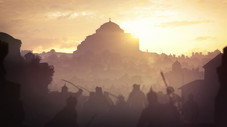
1450. Mayence. Johannes Gutenberg has been working on creating a printing press for more than 2 years. After a not entirely successful demonstration, he tries to persuade the wealthy banker, Johann Fust, to help finance his project. Fust agrees and lends Gutenberg 800 florins, plus 300 florins per annum for general expenses. This is a considerable sum for the period. The 2 men become partners. Fust and Gutenberg’s choice of the first work to be printed is an astute one: Saint Jerome’s Latin version of the Bible. It enjoys an immediate and resounding success.
The goldrush for a fistfull of nuggets
January 24 1848. Coloma, California. In a saw mill belonging to Swiss pioneer John Sutter, James W. Marshall, a carpenter finds pieces of shining metal in the stream next to the saw mill: it’s gold! The news spreads like wild fire and is confirmed by a number of newspapers in March 1848. It’s the start of an unprecedented gold rush. Waves of immigrants from all over the world arrive in California, raising the population from 15,000 to several hundred thousand. The Indians are driven out, expropriated and decimated by disease. The first transcontinental railroad is built and a Californian constitution is soon passed. Criminality also explodes: this is the beginning of the myth of the “Wild West” and its infamous outlaws. The Gold Rush will end several years later, but California and the American mentality will be changed by it forever.
The fall of Quebec: France loses America
1756. The beginning of the Seven Years War, which amongst others sets France against England. The conflict spreads throughout Europe, India and North America. On the American continent the war is considerable weakening the French effort as the British strive to eliminate all French presence there. In 1759 the British launch their offensive and besiege the city of Quebec. After several months of siege the besieged are beginning to run out of supplies. The French general Montcalm organizes several convoys. Wolfe, the English general, seizes the chance: he sends several of his ships to Quebec, which the French guards allow to pass believing them to be the relief. By the time the ploy is discovered by the French, it is already too late.
The “Fronde”, the French civil war
1650. The Kingdom of France. Louis XIV is 12 years old and too young to rule. France is placed under the regency of his mother, Anne of Austria, and Cardinal Mazarin. Poor harvests and the fiscal policy imposed by Mazarin spark unrest in Paris. Parliamentarians, nobles and bourgeois rise in rebellion against royal authority. This marks the beginning of the Fronde, which forces Louis XIV to leave Paris. When the young king re-conquers the capital, a second rebellion breaks out. Louis XIV and his mother are made prisoners in the Palais Royal. This event marks the young man for life.
Al Capone, child of prohibition
On January 16 1920, the XVIII amendment to the United States Constitution comes into force, one year after its ratification. All sale, production and transport of alcohol are henceforward forbidden in the entire territory of America. It’s the start of Prohibition. Several criminals grab the opportunity to create veritable empires by means of contraband liquor. Al Capone is certainly the most infamous among them. The United States Treasury gives the no less famous Eliot Ness the mission of bringing down Al Capone. Despite the many, and fruitful, operations carried out against his clandestine distilleries, the boss of the Chicago underworld holds out. Until another solution is considered: charge Capone with tax evasion.

Black Death, the invisible enemy
1346. Mongols are besieging the Genoese trading post of Caffa in the Crimea (Ukraine). Decimated by the mysterious disease that has pursued them from Central Asia, they give up hope of taking the town. However, before they withdraw, the hurl the bodies of several dead soldiers over the walls using giant catapults. Some of the Genoese defenders take to galleys to flee the epidemic that has stricken Caffa. They carry the disease to all the ports they put into. In a few months, the Black Death spreads throughout Europe before reaching North Africa and Asia…
The Olympic Games, a mirror to society
The Olympic Games were held every 4 years in Olympia. They were Pan-Hellenic, in other words opened to all Greeks. The events provided the opportunity to win Olympic titles (a wreath of wild laurel) and immense prestige. For more than 1,300 years, the Games vanish from History and Olympia gradually falls into oblivion. Everything suddenly changes when the ruins of Olympia are rediscovered in the 13th century. Major digs on the ancient sporting site begin in 1875 and once again put the Olympic Games in the world’s spotlight. The Olympic Games take on new life and henceforth allow the participation of women and all people irrespective of their color.
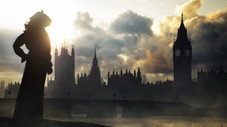
The Suffragettes, the battle for the ballot box
From the end of the 19th century, the women of the European countries energetically demand the right to vote, working conditions and education, just like the Suffragette movement in England. Despite some progress, results are slow to come when the year 1914 dawns. The lack of a male workforce, gone off to the war, forces factories to employ women in positions traditionally occupied by men. The image in the world of work has changed definitively and forever.
Dunkirk, resist at all costs
May 10 1940. World War II. The Germans launch an offensive into Holland, Belgium and Luxemburg. The French and British armies are caught off guard and find themselves surrounded. They are ordered to pull back to Dunkirk. 400,000 men crowd onto the beaches and wait to be embarked back to England: Operation Dynamo begins as General Guderian’s Panzer divisions speed towards the town. Taking advantage of these 3 days respite, 224,686 British and 123,098 French have time to cross the Channel to safety in England. Figures far higher than the Allies first hoped.

Cuba, nuclear standoff
1962. The Cold War. American spy planes spot launch ramps in Cuba that are designed for nuclear missiles. President Kennedy orders that the island be blockaded in order to inspect any ship wishing to dock there. On October 26, Khrushchev tells Kennedy that he will continue his action: “If the United States want war, we shall find ourselves in hell.”. The CIA informs the American President that 24 Russian missiles are now operational and pointing at precise locations in the country. Off the coast of Cuba, the US Navy confronts the Russian fleet and is hunting down Russian submarines. Two of them break surface. But a third remains submerged, refusing to come up. Three exercise charges are dropped to emphasize the order to surface. Moscow orders its vessel to react. A nuclear torpedo is loaded into launch tube No 1. But the captain of the Russian submarine finally decides not to fire his nuclear torpedo.
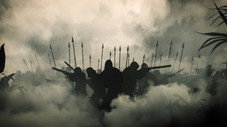
Hernan Cortes at the heart of the Aztec empire
April 23 1519, Hernan Cortes lands in the Yucatan with the intention of bringing the Aztec Empire to heel and seizing all the wealth of the territory. But the expedition turns to conquest ! Aztec civilisation dominates Mexico with an iron fist. Quickly the Spanish make new friendships with locals who see in the European a good alternative to the Aztecs ! After 3 months of intense fighting, Cortes takes the city on August 13, 1521. Mexico has fallen into the hands of Spain.
Constantinople. from one empire to another
April 1453. The Ottomans, led by Sultan Mehmed II, lay siege to the city of Constantinople. In the defense of his capital, the Byzantine Emperor, Constantine XI can count upon his citizens, and also upon Genoese and Venetian soldiers came in reinforcements. But the besieged city holds firm. On May 28th at dawn, the final Ottoman assaults cannot be contained and the weakened and demoralized defenders finally buckle. The Byzantine Empire, last remnant of the Roman Empire and guardian of the orthodox faith in the East, has just collapsed
Aral, a sea for cotton
In 1950s, the Soviets decide to turn the vast desert Steppes of Kazakhstan and Uzbekistan into fields of cotton and wheat. They divert some of the rivers that feed the lake to irrigate the new crops and thus deprive the Aral Sea. Its surface area is twice that of Belgium. Many towns thrive along its shores, especially from fishing. In 1987 the level of the water falls so low that the sea splits into two and then, in 2002, the southern part itself divides into two parts. In 2014, the eastern part of the Aral Sea disappears forever. Man’s unregulated actions caused an ecological disaster.
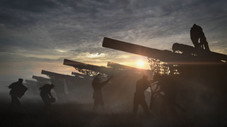
Dien Bien Phu: a Losing Battle
Since the end of the 19th century, Indochina has been a flourishing colony, the gem of the French Empire. However, the Second World War turns everything upside down. At the end of the war, the Viet Minh movement announces the independence. The general Leclerc is thus in charge of restoring the French authority. However, on the spot, he realizes that the situation is not controllable and initiates negotiations. But in high places, there is no question of giving in. An unpopular and very tough war breaks out, a conflict which will end in the hell of Dien Bien Phu.
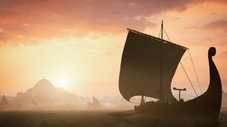
Encyclopedia, dare to know
July 31,1784, Paris. Denis Diderot has just passed away and with him, the memory of the biggest editorial epic of the Age of Enlightenment : Encyclopedia, or a Systematic Dictionary of the Sciences, Arts and Crafts. This monumental œuvre is before anything else the result of the fight of a man against obscurantism and of his unfailing trust in reason. Carried by men such as Voltaire or Rousseau, the adventure will last 25 years. It will encounter numerous unforeseen developments and end in clandestinity but won’t fail to revolutionize the publishing world.

Miners, fodder of the industrial revolution
University of Glasgow, England, 1763. A young engineer tries, in vain, to fix a steam engine before finally understanding what is wrong with it. James Watt still doesn’t know it but he will soon revolutionize the world of industry. From the end of the 18th century, in the depths of the earth, night and day, men scrape, prick and dig interminable and dangerous galleries. True soldiers of the abyss, miners tirelessly pull coal, the main source of energy of the country, up to the surface. This black rock will become the vital fuel of the industrial revolution. The whole Europe will be transformed by the coal revolution but at what price?
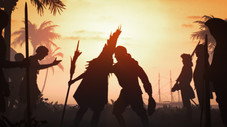
Carthage, Rome's rival
In 814 BC, the exiled Phoenician queen Dido founds the city of Carthage on the African Coast. The city develops and takes the lead of a real maritime empire based on trade. Carthage dominates the Western Mediterranean at that time. But in the third century BC, she finds herself opposed to the Roman Republic, which has just achieved the conquest of Italy. Between the two ambitious cities, the confrontation is unavoidable. Led by the General Hannibal, Carthage will inflict dreadful defeats on Romans and lead Rome on the verge of ruin.
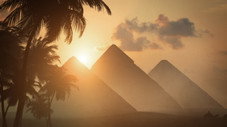
Augustus, emperor of the Republic
At the end of a succession of civil wars which have weakened the Roman Republic, Caesar proclaims himself dictator for life. However, on March 14, 44 BC, he is assassinated by conspirators in the name of the Republic. Mark Antony, his right arm, succeeds in making of Caesar a martyr and tries to claim his inheritance for himself. But the late Caesar had drawn up a will in which he had declared he adopted his great-nephew Octavian, who will later be renamed Augustus. The latter, without any resources, will achieve the unthinkable : to transform the Republic into an Empire.
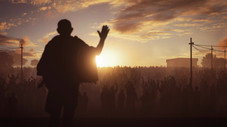
Apartheid, the spiral of fear
August 5, 1962, South Africa. After several months on the run, the Black leader Nelson Mandela is arrested by the South African police and incarcerated in Robben island, a fortress-like jail off Cape Town. He doesn’t know it at that time, but it is only the beginning of his penitential ordeal. Despite this imprisonment, he will quickly become the symbol of the fight against apartheid. A complex and terrifying system of racial segregation is hidden behind this word. Instituted from 1948 by the National Party, apartheid will plunge the country into a continuous climate of insecurity until the end of the 20th century.
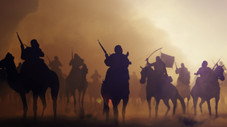
Lawrence of Arabia, for a fistful of sand
1916, the Great War is raging in Europe. Far away from the trenches, in the sand of the Middle East, war has a very different face. All the grounds of the “land of Damascus”, but also the holy places of Islam, are then in the hands of the Ottoman Empire. The archaeologist Thomas Edward Lawrence, a resourceful adventurer, is an English agent present on site. With a handful of intrepid men, he leads the revolt of the Arabs alongside Sharif Hussein, traditional steward of Mecca and Medina. Using at best the forces at his disposal, he gains the Arabs’ trust and becomes: Lawrence of Arabia.
Gandhi, the force of willpower
In May 1893, a man is thrown out of a train, on the platforms of the train station of Pietermaritzburg, a little city of South Africa, for daring to sit in a first-class compartment. This young Indian lawyer by the name of Mohandas Karamchand Gandhi, has disembarked on the continent just a few days before and is having there his first experiences of racism and violence. Of this South-African life, that will last twenty-one years, Ghandi will learn lessons that will fuel his long non-violent struggle for the independence of his great country, then under British domination: India.
Champollion, unravelling the mysteries of the stone
In July 1799, in the middle of the French Campaign in Egypt and Syria, the French soldiers of lieutenant Bouchard discover by chance at Rosetta a large black stone. This stone, also known as the “Rosetta Stone”, is in fact the fragment of a stele engraved in honor of King Ptolemy V, including three writing systems: Greek, Demotic and hieroglyphic. Soon, the scientists of the expedition record the stone's incriptions, before it is taken from them by the English on their return to France. On September 14, 1822, with the help of the precious copies of the Rosetta stone inscriptions and thanks to his genius intuition, Jean-François Champollion manages to unravel the mystery of the hieroglyphs.
Cook in pursuit of the southern lands
In 1415, the Portuguese launch a great era of explorations that will lead to the European discovery of the world. In the Age of Enlightenment, the competition is intense between France and the United Kingdom for the possession of North America and the West Indies, for the Indian colonies, but also for Science. The two powers want to further knowledge in all fields, and discover all the still unknown lands. To this end, they have to face the immensity of the Pacific Ocean, crossed by Magellan in 1521, and believed to be home to a mythical Austral continent...
Deepwater, an ocean of oil
Rented by the BP oil company to drill an oil well in the Gulf of Mexico, the Deepwater Horizon drilling rig explodes on April 20, 2010, before sinking into the ocean and causing a gigantic oil spill. At issue: negligence in the maintenance and in the tests carried out. On September 19, after months of unsuccessful attempts, the spill is finally declared sealed. But the harm has been done: this incident has generated the biggest marine oil disaster in history, tragically impacting the local ecosystems and economy.

Vikings, assault on the Frankish empire
While the Viking raids have come one after another in the Occident for almost a century, in November 885, hundreds of Scandinavian boats sailing towards Burgundy present themselves before the walls of Paris and besiege the city. The stubborn resistance of Count Odo makes it possible for the besieged to resist until the arrival of Emperor Charles the Fat, who, in exchange for a large amount of money, obtains the withdrawal of the Scandinavians. To protect themselves from the Viking threat, the king of the Franks, Charles the Simple, suggests, in 911, a treaty to the Viking chief Rollon, to whom he abandons lands in exchange for the protection of the Seine estuary. It is the beginning of the Duchy of Normandy.
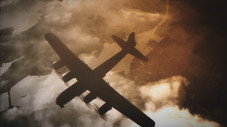
Kursk, The USRS strikes back
In the spring of 1943, after the successive failures of Moscow and Stalingrad, the armies of the Reich go on the offensive again. Launched on July 5th, operation Citadel plans on circling and eliminating, around Kursk, the forces of the Red Army, which have moved forward too much. But, after only 8 days of fighting, Hitler, confronted to a heroic resistance, must resolve to stop the offensive. Considered the greatest tank battle in History, this event represents a real turning point of World War II on the Eastern Front.
Electricity: A Bright Idea!
Our distant ancestors were afraid of lightning. For a long time, it was thought that lightning was sent by the gods. Nowadays, electricity is part of our daily life. Without it, we would feel lost... Watch with CuriosityStream
Heredity: It's A Family Affair!
Early in their history, humans realized that they could affect nature. Controlling fire, making tools, and taming wild animals. What they were not given by nature, they harnessed in other species.
Gravity: It All Falls Into Place!
From the mysterious megaliths in prehistory to the first hot air balloons, and the construction of the Giza pyramid complex, our ancestors have always observed and experimented, gaining a better understanding of their World.
Viruses And Bacteria: Tiny But Tough
Join us now on a journey through the key events that have allowed us to better understand the world of microbe.
Plastic: A Toxic Friend?
Join us on a journey through the key moments that enabled humanity to discover plastics.
Electromagnetic Waves: Do You Copy?
Long-distance communication, moving stealthily through the dark without being detected, and observation from afar have all become commonplace. At any moment, you can know exactly where you are on the planet.
Energy: A Burning Question
Today our understanding of energy enables us to send rockets into space. Compared to our ancestors, we have incredible power at our disposal. But what exactly is energy? Where does it come from?
Fluid Mechanics: A Source Of Inspiration
Today, we can run climate simulations on a global scale. We have learned to control rivers and protect ourselves from flooding. How did we achieve these feats? Watch with CuriosityStream
Quantum Physics: A Step Into Unknown
From the infinitely small to the infinitely large, we have harnessed our expertise to develop incredible technologies. But have we come full circle? Let's go on a journey through the key moments that have allowed humanity to discover: quantum physics!
Chaos Theory: Small Causes, Great Effects
Today, we know that many natural phenomena are based on the laws of physics. We can forecast the weather several days in advance. But are we really sure it is possible to predict everything?
Algorithms: Following The Recipe!
Today, in our daily lives, we use countless machines to do our hard work for us. Each of them obeying a specific program, custom written in a particular language.
Mathematics: How To Speak To Robots?
We know how to handle numbers so large that all the books in the world would not be enough to contain them. Our societies are profoundly reliant on an increasingly complex equation.
Plate Tectonics: Great Shakes
Today, we are just beginning to understand what happens beneath our feet, in the heart of our planet. Tomorrow, we may be better equipped to predict and prepare for volcanic eruptions or tsunamis.
More Like This
Unabomber: In His Own Words
Princess Margaret: The Rebel Royal
Medal of Honor
True Evil: The Making of A Nazi

Wild Islands
The Porter

WWE Evil

Scouting for Girls: Fashion's Darkest Secret
Dawn of the Croods

Poldark

Dark Net
Putin, Russia and the West

Star Wars: The Bad Batch
Secrets of the Krays